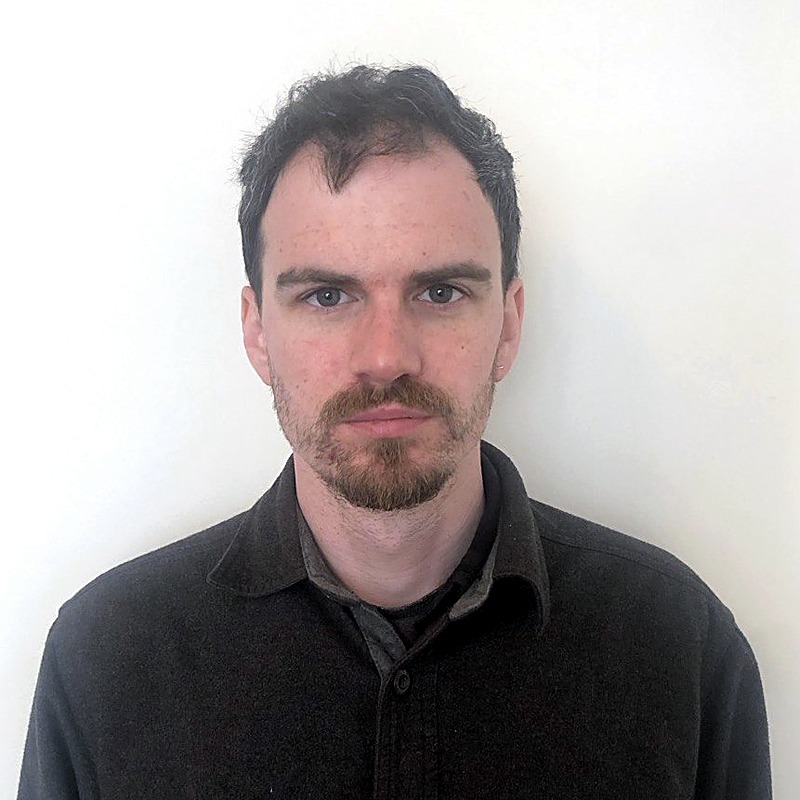
Colum Finnegan
I am a philosopher of mind and technology at the Centre for the Study of Existential Risk (CSER), University of Cambridge. My work examines how the architectural and incentive structures of modern technologies, from social media platforms to large language models, shape human cognition, social resilience, and, over longer time horizons, cultural evolution. My doctoral research at University College Cork extended the mindshaping framework to the design of online communication technologies.
My research spans several intersecting domains: the interaction between LLM adoption and scientific discovery; the philosophical and strategic dimensions of nuclear proliferation; and the use of Buddhist philosophy and cognitive science to address the psychological barriers to climate action. These strands converge on a single question.
What cognitive and institutional conditions does humanity require to navigate 21st-century existential threats, and how do we foster and protect them?
Structural stagnation
A central focus of my current work is a risk I call structural stagnation: that widespread LLM adoption, by automating research and reinforcing existing patterns in data, may foreclose the paradigm-breaking shifts that drive scientific discovery and moral progress. As AI systems increasingly shape how we reason, create, and evaluate, they may lock in today's frameworks precisely when global risks demand flexible, original thinking.
Epistemic security
I also work on epistemic security: how the contemporary information landscape, from algorithmic curation to AI-generated content, creates new vulnerabilities for social cohesion, democratic resilience, and collective agency, and what institutional conditions might protect them.
Mindshaping and communication technology
Mindshaping describes how humans' social and cognitive capacities are brought into being, shaped by their conspecifics, communication technologies, and surrounding ecological niche. I extend this framework into a diagnostic and design tool: a way to identify how online communication architectures cause systemic harm, and how they might be redesigned to mitigate it.
Full list on ORCID.
Degenerative AI: Creative Processes and the Human Edge
Invited talk · Istituto Marangoni, London
Reverse Classroom Pedagogy: Partnering with Postgraduates Through Publication and Syllabus Development
Cambridge Teaching Forum
Engineering Online Communication Using Mindshaping Theory
Forum for Philosophy, Engineering and Technology · Karlsruhe Institute of Technology
Neoliberals in Name Only: The Ironic Use of Neoliberal Rhetoric in Digital Capitalism
Political Theory Graduate Conference · University of Leeds
Mindshaping and ICT: The World Made New
Society for Philosophy and Technology Conference
Postdoctoral Research Assistant
Centre for the Study of Existential Risk, University of Cambridge
Research and policy work on nuclear weapons and existential risk with Prof. S. M. Amadae; co-leading a handbook project developing the field of Global Catastrophic Risk; investigating the risks of using LLMs in science and moral inquiry.
Research Assistant
University College Cork. Manuscript preparation for The Gambling Animal (Prof. Don Ross)
Research Assistant
New York University. Indian philosophy manuscript preparation (Prof. Gabriela Ilieva)
Research Assistant
University College Cork. Game theory research (Prof. Don Ross)
PhD in Philosophy
University College Cork. Thesis: Coordinating Minds: Mindshaping, Communication and Technology (supervisor: Don Ross)
MA in Philosophy (Distinction)
University College Cork
Gave the invited talk “Degenerative AI: Creative Processes and the Human Edge” at Istituto Marangoni, London.
Book chapter “Epistemic Diversity and Artificial Superintelligence” forthcoming in Philosophy of AI: Volume 1 (Springer).
Joined the Centre for the Study of Existential Risk, University of Cambridge, as a Postdoctoral Research Assistant.
Centre for the Study of Existential Risk, 16 Mill Lane, Cambridge, CB2 1SB, United Kingdom. Best reached by email.